

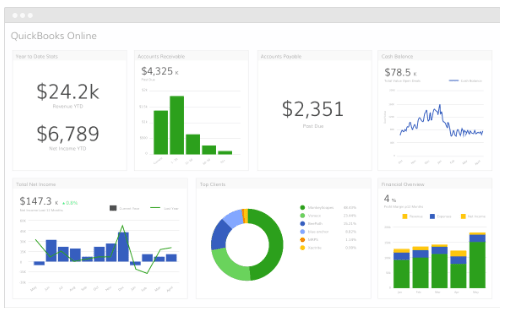
Instead, analysts use combinations of ratios to track a company’s performance trends, benchmark it against peers, and identify potential risks or strengths. Inventory and landed cost are often the largest assets on a balance sheet. For many small and mid-sized businesses, QuickBooks is the first choice for managing finances and basic inventory. It brings structure to accounting, simplifies bookkeeping, and works well when inventory is simple, with few items and standard units of measure.
Sr Accountant (Global Inventory Accounting)
- You list these items as assets on your balance sheet until you sell them.
- Financial ratios are calculations that compare financial statement numbers to evaluate liquidity, leverage, efficiency, profitability, and market value.
- As the unfinished cars make their way down the assembly line, they are considered a work-in-progress until they are finished.
- Below is an example from Proctor & Gamble’s 2022 annual report (10-K) which shows a breakdown of its inventory by component.
- Inventory is not just a static asset but a dynamic element that influences the overall efficiency and success of a company’s operations.
The choice of inventory valuation https://uos-urbanscience.org/archives/14338 method has far-reaching implications for profitability, financial analysis, and even taxes. Accrual basis inventory accounting records income and expenses when transactions occur, regardless of when money is exchanged. Inventory purchases are considered assets until items are sold, at which point the cost is transferred to COGS. Likewise, sales revenue is recorded when the sale is made, not when payment is received. Choosing the appropriate inventory accounting method is crucial for businesses to accurately value their stock, determine profits, and remain compliant with financial regulations. Each method impacts how inventory is recorded, how cost of goods sold (COGS) is calculated, and how financial results are presented.
Contact Management

By analyzing inventory turns, companies can adjust inventory levels, manage cash flow more effectively, and gain insight into consumer demand and operational effectiveness. Inventory turnover measures the frequency with which a business sells and replenishes its inventory over a specified period. High turnover reflects strong sales performance and efficient inventory handling, while lower levels may indicate excess or slow-moving stock. According to our inventory definition, there are many different types of inventory and each is accounted for slightly differently.
Join 1000s of businesses and accountants who have made the switch
An effective inventory accounting system doesn’t just ensure compliance with accounting standards—it also minimises financial loss caused by overstocking, spoilage, shrinkage, or mismanagement. By maintaining accurate inventory records, businesses can align purchasing decisions with actual demand, reduce storage costs, and gain visibility into their supply chain performance. The main purpose of inventory accounting is to accurately reflect the value of inventory on the balance sheet and the cost of goods sold (COGS) on the income statement. The inventory accounting process ensures that a company’s financial statements provide a true and fair view of its financial position and performance. Inventory accounting is an essential aspect of financial management and significantly impacts business operations and profitability.
- Conversely, FIFO will show lower COGS, resulting in higher gross profit and net income.
- It is used to evaluate pricing strategies, optimize production and make informed decisions about inventory management and paints a picture of your production efficiency.
- This leads to more efficient resource use and lower inventory holding costs.
- Inventory plays a significant role in your company’s financial statements, impacting both the balance sheet and the income statement.
- Income statements, statements of retained earnings and balance sheets are financial documents essential to a company’s operations, and sometimes even required by law.
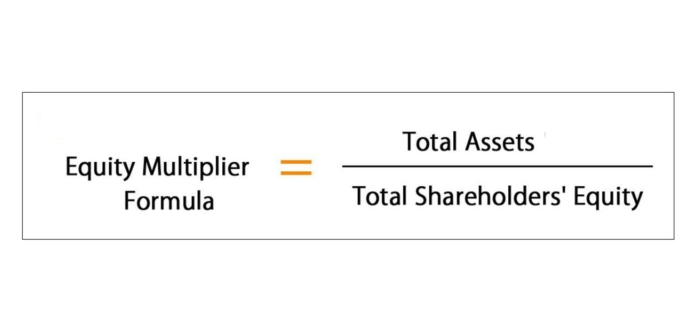
Financial ratios are calculations that compare two figures from a company’s financial statements to assess the financial health of the business. Comparing financial ratios with competitors or industry benchmarks helps analysts to determine a company’s relative performance. These comparisons indicate whether the business is stronger, weaker, or on par with peers, guiding management in identifying competitive advantages and areas for improvement. Trend analysis is a type of finance ratio analysis used to evaluate a company’s financial performance by comparing data over multiple periods to identify consistent Retained Earnings on Balance Sheet patterns, movements, or tendencies. The operating cash flow ratio is another liquidity ratio that calculates the number of times a company can pay off its current liabilities with the cash generated in a given period.
- This valuation is crucial for determining the cost of goods sold and, ultimately, the gross profit of a business.
- As inventory remains a key component of many organizations’ financial health, accurate inventory accounting will continue to play a vital role in promoting financial transparency and operational efficiency.
- Some inventory accounting KPIs are related to the cost of selling inventory and others (not to be ignored!) are related to the cost of unsold inventory.
- The two most commonly used accounting methods for this purpose are FIFO and LIFO.
- This role is responsible for supporting the Global Inventory Accounting Team, through execution of daily operations with limited supervision.
- They show how easily a business can convert assets into cash to pay bills, suppliers, and other near-term liabilities.
Proficiency in NetSuite Inventory Management, Manufacturo MES, or comparable systems is strongly preferred. The cash basis inventory accounting method is where expenses are recorded when cash is spent and income is recorded when cash is received. Inventory accounting helps businesses track and control inventory costs, including purchasing costs, holding costs, and potential losses due to obsolescence or spoilage. This allows businesses to identify areas for cost reduction and improve profitability. • Conduct regular physical inventory counts and maintain detailed transaction records for all purchases, sales, returns, and adjustments to ensure your financial statements remain accurate and reliable. Recognizing and measuring inventory correctly ensures that financial statements reflect the true value of a company’s assets and cost structure, in compliance with accounting inventory in accounting standards.
